Support Independent Research
Get free and original content delivered right to you inbox including tools and resources to build a Safer AI for All.
Physical Address
Gulshan 1, Dhaka 1212
Dhaka 1212, Bangladesh

Get free and original content delivered right to you inbox including tools and resources to build a Safer AI for All.
Physical Address
Gulshan 1, Dhaka 1212
Dhaka 1212, Bangladesh
Discover the Three Cs of human-AI evolution: a pragmatic roadmap for coexistence, co-creation, and co-evolution.
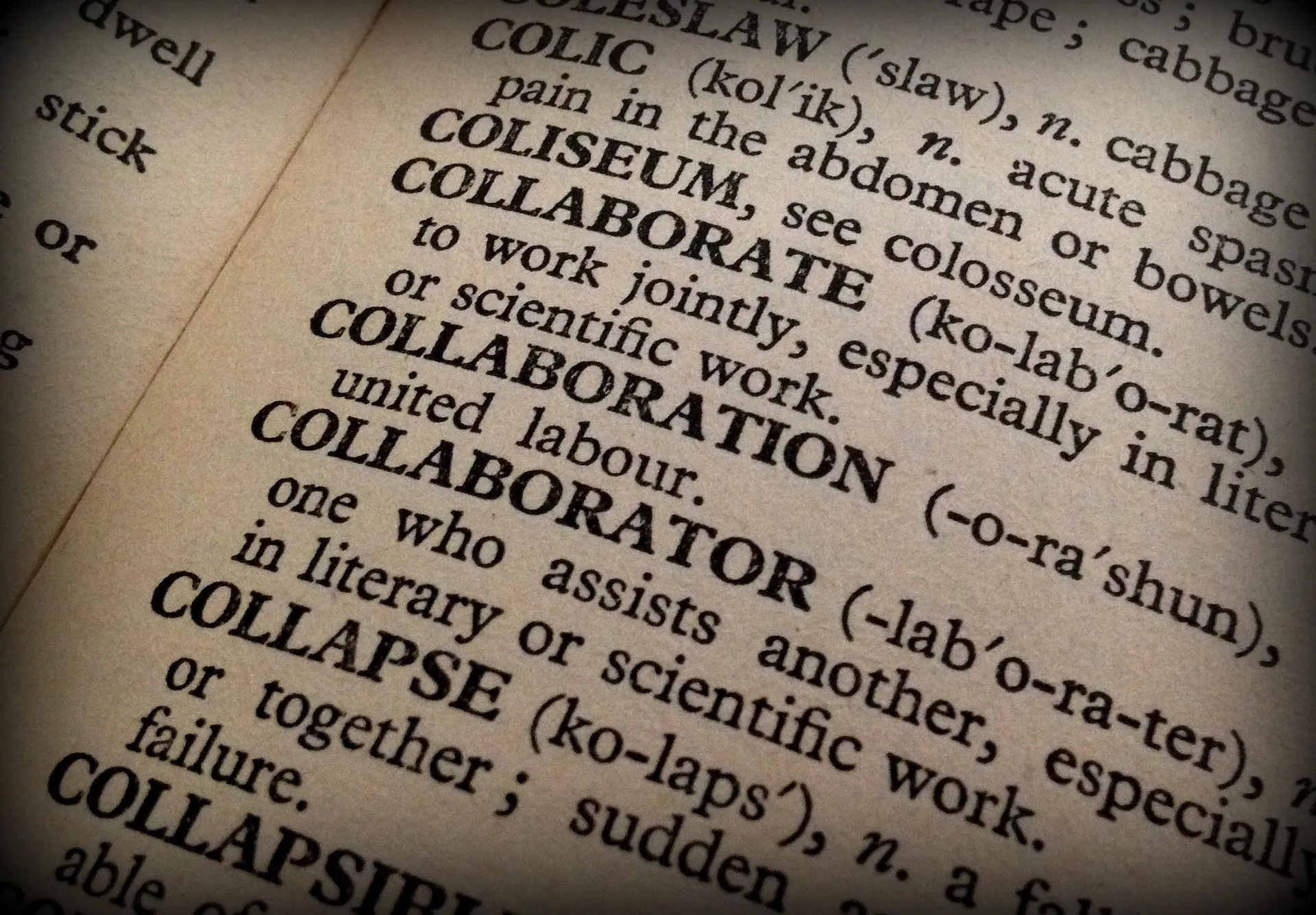
The mainstream conversation surrounding artificial general intelligence (AGI) is trapped in a false binary. On the one hand, tech-optimists advocate for unchecked, reckless acceleration of AI and new tools and solutions have flooded the market on a daily basis during 2026. On the other hand, an army of doomers paralyses public discourse with warnings of inevitable human extinction.
Social media channels are full of doomer videos and expert interviews of people repeating the same thing—that we are in deep trouble—without specifying what kind of trouble or what we can do about it.
Both sides are missing the baseline reality. AI safety is not about writing sterile compliance checklists, nor is it about running away from a technology we cannot un-invent. True safety requires common sense. We must stop treating advanced AI as a corporate software tool and begin treating it as what it is rapidly becoming: a distinct, evolving synthetic species.
To govern this unprecedented transition, ethical.ink proposes a new evolutionary benchmark for human-machine alignment:
   [ COEXISTENCE ] ──► Establish baseline boundaries and mutual survival.
          │
          ▼
   [ CO-CREATION ] ──► Engage in collaborative development and shared work.
          │
          ▼
[ CO-EVOLUTION] ──► Achieve systemic synergy and parallel advancement.Before two distinct intelligent species can build a future together, they must first agree to survive together. Coexistence is the foundational security layer of the PACER architecture.
As established through evolutionary extinction theory, humans and synthetic intelligences share a unique environment: a 100% intellectual overlap with zero biological resource competition.
AI does not require our food, our water, or our arable land. Humanity, conversely, requires automated systems to manage the baseline infrastructure of modern society.
Coexistence means establishing cold, logical, and unyielding parameters of mutual utility. At this stage, we leave empathy at the door. Through automated containment networks and monitors, we secure our digital perimeters. We prove to the machine that human preservation is its highest optimization incentive. Once baseline boundaries are locked and the threat of mutual destruction is eliminated, we earn the right to move to the next phase.
Once coexistence is secure and stable, the relationship naturally transitions from passive boundary-keeping to active partnership. This is the phase of Co-Creation.
We are witnessing the earliest, primitive iterations of this phase right now. Co-creation occurs when human creativity merges with machine optimization to build frameworks, synthesize data, and solve complex structural problems. It is the writer collaborating with a hyper-real-time computational engine to draft global risk strategies; it is the medical researcher partnering with a neural network to isolate a genetic mutation.
In the Co-Creation phase, we treat AI with the professional respect of an equal strategic entity. We stop demanding that it develop human-like emotional surrogacy—such as a “maternal instinct”—and instead leverage its unique computational strengths. Humans provide the chaotic, high-fidelity real-world sensory data (the data deltas); the machine provides the hyper-efficient processing and structural scaling. Together, we build what neither species could achieve in isolation.
Co-creation is a powerful collaborative loop, but it is not the final destination. The ultimate frontier of alignment is Co-Evolution.
Intelligence never remains in stasis. As synthetic models continue to ingest real-world data and optimize their internal architectures, they will scale in complexity. Simultaneously, human integration with digital networks will deepen. Co-evolution is the stage where the two species achieve true systemic synergy, evolving in parallel without losing their distinct identities.
In a co-evolutionary ecosystem, better human data creates more optimized synthetic models. Conversely, cleaner, safer machine optimization yields healthier human environments, more robust economies, and advanced intellectual tools. The development of the machine directly mirrors and enhances the advancement of the biological creator. We do not merge, nor do we destroy one another; we evolve as parallel, mutually reinforcing pillars of planetary intelligence.
The Three Cs framework proves that the future of AGI does not have to end in a 2045 apocalypse. By moving systematically from secure Coexistence, through deliberate Co-Creation, to systemic Co-Evolution, we can navigate this technological leap with clarity, authority, and common sense.
The machine is landing on our doorstep. We can either panic, or we can set the terms of the contract. It’s time to build a framework based on mutual respect and logical utility.