Support Independent Research
Get free and original content delivered right to you inbox including tools and resources to build a Safer AI for All.
Physical Address
Gulshan 1, Dhaka 1212
Dhaka 1212, Bangladesh

Get free and original content delivered right to you inbox including tools and resources to build a Safer AI for All.
Physical Address
Gulshan 1, Dhaka 1212
Dhaka 1212, Bangladesh
The ethical.ink origin story and reason why this site exists.
From the creators of AI to the people funding and advancing it, a growing number of voices are warning that we could be heading towards serious trouble.
“We can only see a short distance ahead, but we can see plenty there that needs to be done.” ~Alan Turing
Welcome to ethical.ink,where we invite you to th.ink about the rapidly developing relationship between humans and synthetic intelligence.
root: ~$ date
Sun Mar 1 10:53:00 UTC 2026
echo "Hello World"
echo "February, 2026."
echo "T minus 20 Years"
echo "From the desk of D.S."
This is a site “Made with ♥️ in Bangladesh”. Not in the way that you find written on the footers of websites, these days. This site brings together thousands of hours of research, sleepless nights and trying to find a way out of the darkness we’re in with AI. When experts tell you that the world’s going to end by the time your child is 35, that’s the kind of love that makes you put your entire life on hold and say, “Not on my watch.”
For anyone working in tech, this is a time of wonder and amazement. Because we”ve seen what tech can do and cannot do. In merely three years since first launch, AI has made us rethink where we stand. AI has made it impossible for us to imagine a world without it. The question is—and this is according to industry leaders—could AI imagine a world without us? How long do we have, before it’s AI that owns us?
You see, there are things that folks from my generation can spot before it happens. And it’s not because we’re smart. Quite the opposite. It’s because we’ve been there before.
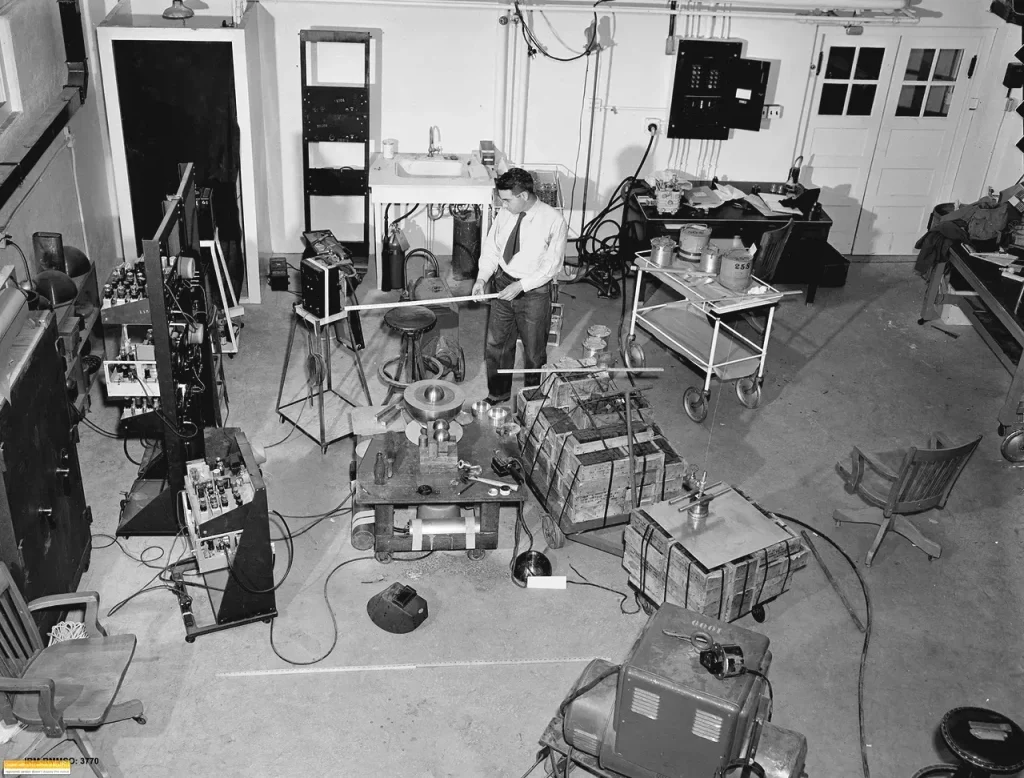
In 1946, Louis Slotin—a scientist at Los Alamos—was conducting an experiment with a plutonium core so dangerous it had earned the nickname “the demon core.” The experiment was to enclose the core within two beryllium hemispheres, bringing them as close together as physically possible without letting them snap shut. If they did, it was game over.
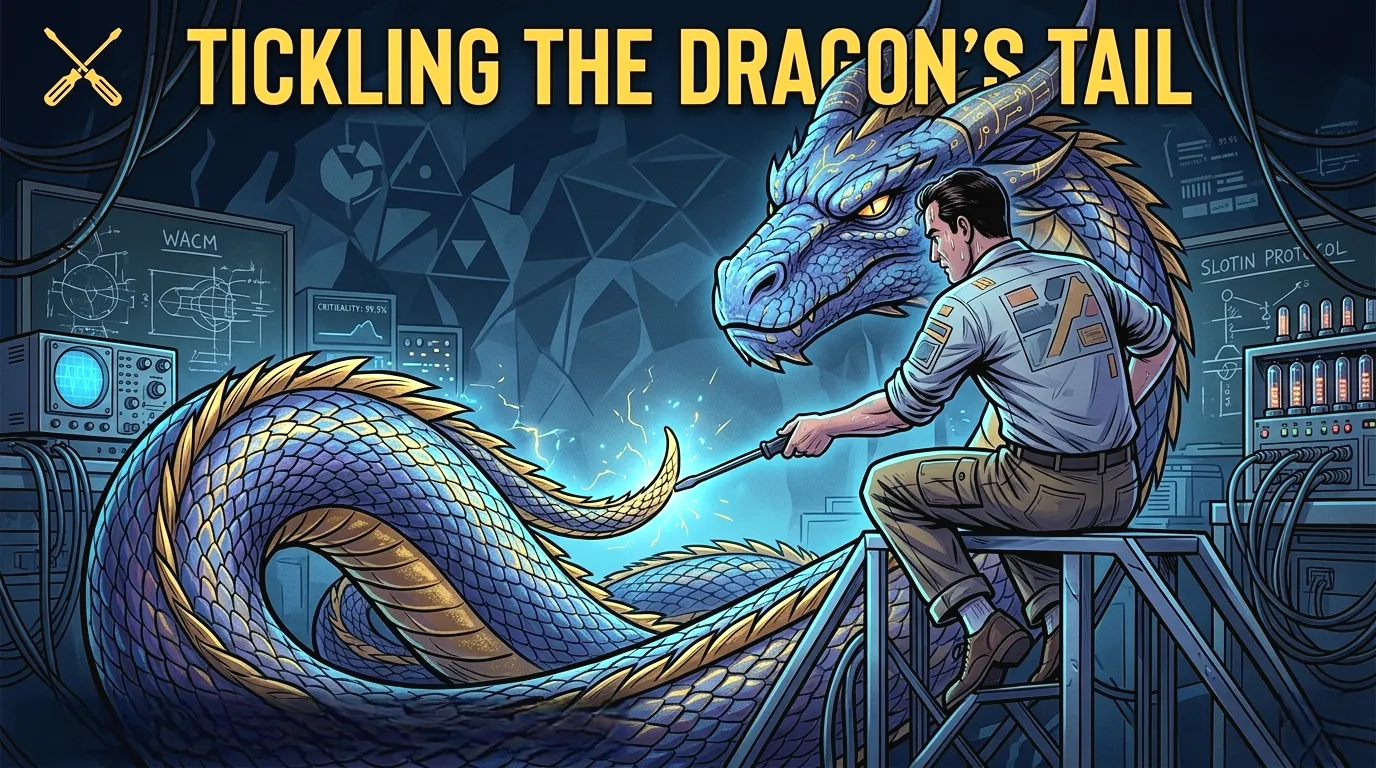
They called it “tickling the dragon’s tail.”
Slotin—a Manhattan Project veteran, renowned for his bomb assembly skills—conducted the experiment without protective gear, without shielding, and without the purpose-built tools that protocol required.
With a flathead screwdriver as his only safeguard between life and annihilation, he kept the hemispheres apart by hand. A callous disregard for life, including his own, that hints at something deeper—something worth revisiting at the end of this post.
Needless to say, the screwdriver slipped.
Fate has impeccable timing in such things, and—it must be said—a morbid sense of humour.
The globe snapped shut.
In the fraction of a second that followed, Slotin prised the hemispheres open with his bare hands—saving the lives of his colleagues, and immediately instructing them to mark their exact positions on the floor, so that the medical team could calculate each person’s radiation exposure. In that single moment, which must have felt like an eternity, Slotin absorbed a lethal dose estimated at over 1,000 rads. That’s the equivalent of 100,000 chest X-rays—in an instant.
Nine days later, he was dead.
Doctors described his injuries as a “three-dimensional sunburn.” He had been cooked from the inside out.
There’s a reason I’ve dredged up this morbid piece of history. If you’ve been following the thread, you’ll already be asking the same question:
Just how cooked are we?
¹ Slotin’s experiment took place shortly after Fat Man and Little Boy were dropped on Hiroshima and Nagasaki. The demon core had been intended for a third bomb, had Japan not surrendered. His recklessness could have been an act of atonement—or the behaviour of someone so numbed and desensitised that life itself had lost its weight. It is worth asking how we would frame that, in the context of what is being built today.