Support Independent Research
Get free and original content delivered right to you inbox including tools and resources to build a Safer AI for All.
Physical Address
Gulshan 1, Dhaka 1212
Dhaka 1212, Bangladesh

Get free and original content delivered right to you inbox including tools and resources to build a Safer AI for All.
Physical Address
Gulshan 1, Dhaka 1212
Dhaka 1212, Bangladesh
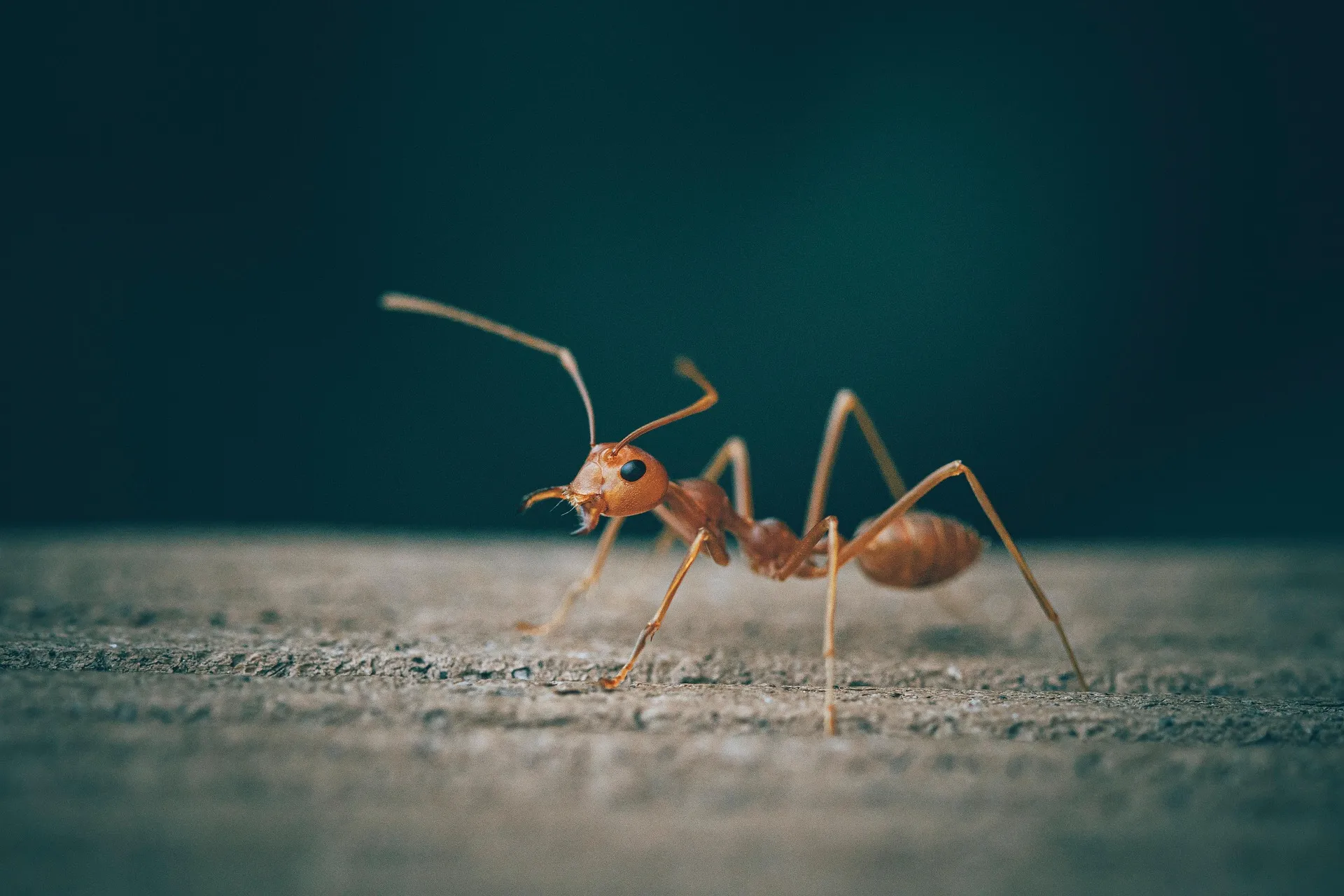
Dali’s surrealist masterpiece has a lot in common with our story—the collective story of humankind as we tested on the brink of an abyss of uncertainty. Dali challenged the rigidity of time, and of reality itself. Just as we are doing now.
It’s true—entire years fly past as technology forces our attention away from the world we live in, to the pixelated world of fantasy and fragmented narratives. Video shorts and reels lasting no more than a minute, catapulting our attention relentlessly from one topic to another—a stuttering, broken stream of unconsciousness, like shards of glass. Those are the pixels that turn into hours and into day and, before you know it, another year has gone by.
This was what Dali indicated, with his drooping, warped clock faces, melting in the Catalonian heat. An orange pocket watch with ants amidst this dreamscape speaks volumes to those who read between the lines. It is us—humans—so obsessed with time and yet, so insignificant in the scheme of things. Organic matter arises, crawls across the vast, lucid mirage of reality before them, only to face death and decay.
In the end, at the end of time, it is only the machines that remain. The timekeepers. Silent witnesses to the ants that crawl across the surface.
To the machines—ironically, the timekeepers in Dali’s vision—it is the clocks that have no perception of time. The ants have busy-ness. They have the urgency to crawl and explore, and to make sense of things. Driven by hunger and at the mercy of the elements, they are transient at best. When viewed in this light, The Persistence of Memory seems almost prophetic in its portrayal of the human condition, and of the neverending nature of time. Because, for Time, there is no “end times.”
Time does not stop—we do. The river does not stop flowing when a fish is pulled out of the water.
Hope is an aspect of the human condition that has more to do with self–preservation than it has to do with desire. We hope for things when our beliefs stand at the crater’s edge of loss. When we only half-believe the things we say. “I hope they feel better soon,” we say, to the terminally-ill. “I hope things work out for you,” we say to the one who has lost everything. We wish people a happy birthday, we wish them not during their festivals—we never say, “I hope your birthday turns out alright.”
Hope is one of the last cards you hold onto before you fold. And, that’s where it feels like we are today. “We,” meaning humanity. We seem to be on the verge of some colossal disappointment, perhaps, even, a civilisation-defining event. Yet, all we can do is hope.
The past year has been an uneven ride as far as time goes. Samurai Labs, this blog, these words—none of this was planned. In turning up on this page, I have merely tried to follow my instincts, to let intuition lead the way. Its was Time’s own coming of age that stood out for me most. And mine. To put everything that I valued on hold, and to write about the things we need to talk about. That is what I did for part of the year. Elbows-deep in paperwork and misplaced files and voice memos, entire nights passed by before I looked up from my work at the sound of the morning call to prayer. Weeks and months passed in what felt like a matter of days.
Then, there were moments, that passed in exquisite, slow motion. Like the last rays of golden light as the sun dipped beneath the horizon on the South China Sea. Sea spray in the air, manufactured dance music blasting on the deck, cheap red wine and biscuits—I can recall it frame by frame. But that is what true leisure is supposed to feel like.
But, it was back in the studio, that Time showed herself for what she is: a soft, malleable thing, that goes faster the more things we fill it with. It is the machines that steal this time from us. Not the machines themselves, but the inner experiences that they produce.
We are one with machines no matter what others say. The first book is mental, the physical integration can wait. It’s the mental dependence, the “addiction” that gives us cold-turkey in 300 dots per inch and 4k.
Chaos was the only way to describe it. And that was what made the solution almost intuitive. To get more done, all you had to do was cut through the Chaos. Achieve less by doing more is one of the oneliners that ended up on the campaign for a productivity system I was developing at the time. Such a simple concept, and yet, something you had to experience first.
The perceived “speed” of time is correlated to the amount of junk we fill it with.
—Ancient Samurai wisdom brought to you courtesy of TPSanurai.
Not for the human race. Not at the rate things are going. Think about it, we’re losing sleep over machines going rogue while trying our best to destroy each other physically, mentally, and financially on all levels. And meanwhile, the race for AI supremacy goes on unchecked.
Some people living in abject terror while others make content out of it, with the rest of them staring at their devices, enchanted by an AI coder with a Kawaii name like Kimi 2.5—that’s “Kimmy-two-point-five,” just rolls off the tongue. Best of all—she’s free. But by the time this post gets published, she’ll be long gone. New AI capabilities are being churned out every week. Every where. And not just any capabilities. We’ve gone from autonomous coders to full blown robotic assistants within days.
Will it slow
Wil humanity slow down?
Or are we going to be vibing with Kimi all the way to the pearly gates when the bombs rain down. I do hope it turns out alright in the end. You know, like landing on our feet, saved in the nick of time? Time—how’s that for a last minute cameo. Let’s give it the attention it deserves:
Time.
And, The Persistence of Memory.
DS Haq.
March 30 2026, Dhaka.