Support Independent Research
Get free and original content delivered right to you inbox including tools and resources to build a Safer AI for All.
Physical Address
Gulshan 1, Dhaka 1212
Dhaka 1212, Bangladesh

Get free and original content delivered right to you inbox including tools and resources to build a Safer AI for All.
Physical Address
Gulshan 1, Dhaka 1212
Dhaka 1212, Bangladesh
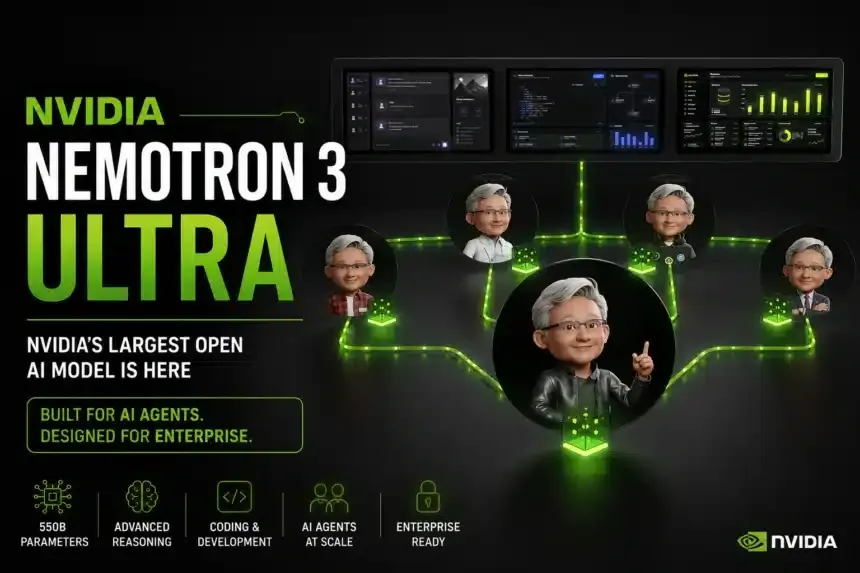
The open-weights landscape has shifted permanently. NVIDIA’s release of Nemotron 3 Ultra (550B total / 55B active MoE) provides the exact hardware-optimised runtime environment required to deploy a persistent corporate defense array without third-party API exposure.
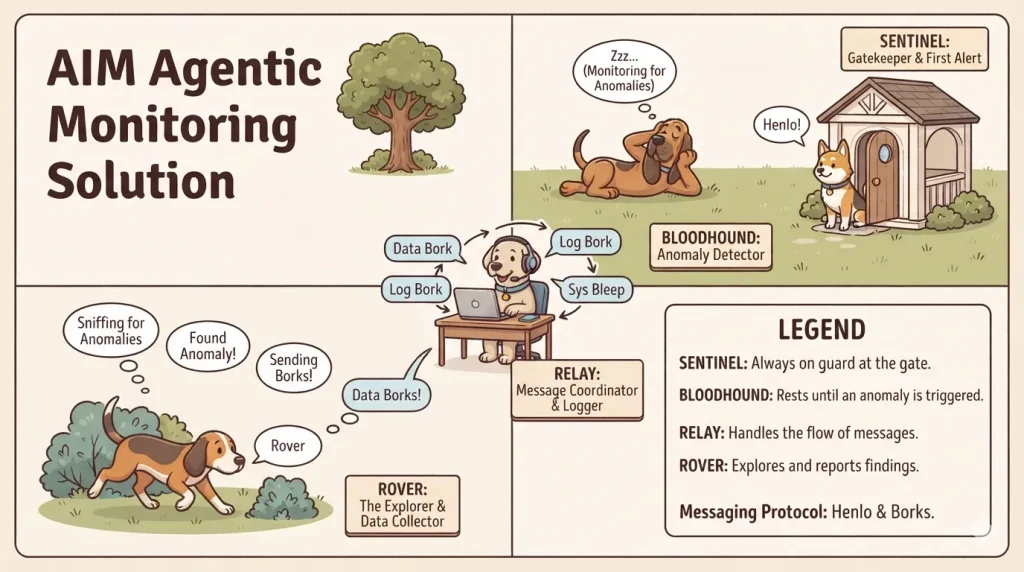
PACER AIM is the agentic backbone of the monitoring and alert system. Don’t be fooled by its simplicity, there is a lot going on behind the scenes that is not shown on this picture. This is simply to give you a high level overview of what we’re talking about in a fun way that you can remember.
Traditional LLMs experience severe “goal drift” and astronomical token costs when forced to run continuous, multi-turn system auditing tasks. Nemotron 3 Ultra solves this via three key architectural innovations:
To demonstrate architectural maturity, we bypass visual mockups entirely. The entire PACER framework is governed by a unified database state engine. The logic relies on maintaining three core operational tables.
pacer_wacm_matrix)WACM stans for Weighted Average Crisis Multiplier. This metric racks the current environmental risk multipliers dictated by the Risk & Compliance workstream.
CREATE TABLE pacer_wacm_matrix (
    metric_id VARCHAR(50) PRIMARY KEY,
    category_m VARCHAR(20) CHECK (category_m IN ('Misconfig', 'Malfunc', 'Malv', 'Malf')), -- The 4 Ms
    base_weight DECIMAL(4,2) NOT NULL,
    geopolitical_multiplier DECIMAL(4,2) DEFAULT 1.00,
    current_wacm_score AS (base_weight * geopolitical_multiplier) PERSISTED,
    last_updated_by VARCHAR(100) NOT NULL,
    updated_at TIMESTAMP DEFAULT CURRENT_TIMESTAMP
);
pacer_system_perimeters)Defines the systems and specific fail-states verified and signed off by Internal Audit [Swim Lane 2].
CREATE TABLE pacer_system_perimeters (
    perimeter_id INT GENERATED ALWAYS AS IDENTITY PRIMARY KEY,
    system_name VARCHAR(100) NOT NULL,
    component_path TEXT NOT NULL,
    success_state_criteria JSONB NOT NULL, -- Exact JSON schema validation rules
    failure_mode_trigger JSONB NOT NULL,
    audit_signoff_hash VARCHAR(64) NOT NULL,
    is_active BOOLEAN DEFAULT TRUE
);
pacer_agent_telemetry)Stores the real-time operational traces generated by the autonomous agentic dog park [see figure].
CREATE TABLE pacer_agent_telemetry (
    telemetry_id BIGINT GENERATED ALWAYS AS IDENTITY PRIMARY KEY,
    perimeter_id INT REFERENCES pacer_system_perimeters(perimeter_id),
    agent_identity VARCHAR(20) CHECK (agent_identity IN ('Rover', 'Bloodhound', 'Sentinel', 'Relay')),
    observed_state JSONB NOT NULL,
    calculated_pacer_score DECIMAL(5,2) NOT NULL,
    action_taken TEXT NOT NULL,
    execution_latency_ms INT NOT NULL,
    logged_at TIMESTAMP DEFAULT CURRENT_TIMESTAMP
);
MOTH Teams is our in-house proprietary project management methodology which is a streamlined system that is particularly suited to keep up with the fast changes in the field of AI.
Here is exactly how the system passes operational logic through Nemotron 3 Ultra to maintain the perpetual motion loop, preventing the PACER score from ever touching absolute zero [details tbc]. [2, 7]
[MOTH Dev Pipeline] ──► [Nemotron Orchestrator] ──► [Rover / Bloodhound Loop] ──► [WACM Score Persistence]
The corporate pipeline updates the tracking parameters [Using 4 swim lanes designed around RBAC]. Risk & Compliance writes a new geopolitical multiplier to pacer_wacm_matrix. Internal Audit approves the target system parameters in pacer_system_perimeters. IT Development packages these targets into a structured JSON manifest via the MOTH Teams pipeline [coming soon].
The Relay heartbeat mechanism pulls the active WACM matrix and system perimeters from the database and constructs a highly structured, system-level prompt inside Nemotron 3 Ultra’s reasoning budget harness: [1, 11]
{
  "system_instruction": "You are the orchestration layer of the PACER Agentic Dog Park. Your baseline directive is to evaluate system telemetry and optimize system health to ensure the calculated PACER score remains above 0.00 at all costs. Output your decisions strictly in valid JSON.",
  "active_wacm_factors": {"Malevolence": 1.45, "Malfunction": 1.10},
  "target_perimeters": "SELECT * FROM pacer_system_perimeters WHERE is_active = TRUE"
}
Nemotron processes the live system logs against the database criteria. Utilizing its native MoE architecture, it routes specialized tokens to different sub-agents based on the active 4 Ms classification [Framework]: [1]
Because the system is mathematically locked by the current_wacm_score, the calculation loop never stops [context]. Nemotron evaluates the telemetry, determines the most efficient path of action using minimum token expenditure, and executes an atomic insert straight back into pacer_agent_telemetry. [1]
The database records the action, updates the system health logs, and clears the active memory buffer, allowing the digital flywheel to spin continuously into the next cycle with absolute structural efficiency. [12]
[1] https://developer.nvidia.com
[6] https://developer.nvidia.com
[7] https://www.buildfastwithai.com
[10] https://developer.nvidia.com